How to Keep Your Summer Meals Safe: Insights from the FSA’s New Survey
The Food Standards Agency’s latest consumer survey shows risky habits that rise in summer. Learn the science and simple steps to keep food safe this season.
Why summer raises the stakes
Warmer weather, picnics, and barbecues are all part of a British summer, but heat also creates a perfect environment for harmful bacteria to multiply. The evidence suggests that food‑borne illnesses such as salmonella and campylobacter increase when food is left at unsafe temperatures for too long. A small lapse – for example, leaving a salad out while you chat with friends – can turn a pleasant gathering into a health risk.
What the FSA’s Consumer Insights Tracker found
According to the Food Standards Agency, their Consumer Insights Tracker covering April 2025 to March 2026 shows confidence in the food supply remains high, yet certain practices continue to pose risk. Some respondents reported eating food past its use‑by date, storing leftovers longer than recommended, or reheating leftovers multiple times. The agency points out that these habits become especially problematic in the summer months when outdoor cooking and higher ambient temperatures provide more opportunities for bacteria to spread.
How bacteria grow and why temperature matters
Bacteria such as Salmonella and Campylobacter are present on many raw foods, especially poultry, pork, and eggs. When food is kept in the so‑called “danger zone” – between 8 °C and 60 °C – the bacterial population can double every 20 minutes. This exponential growth means that a piece of chicken left at room temperature for just an hour could contain thousands more organisms than when it was first cooked.
The mechanism is straightforward: heat provides energy for bacterial enzymes, while moisture and nutrients in food act as fuel. As the temperature rises, enzymes work faster, leading to rapid replication. Conversely, cooling food quickly slows enzymatic activity, halting growth. The NHS recommends that cooked food be refrigerated within two hours of preparation and kept at 5 °C or below; the colder the storage, the longer the food remains safe.
The ‘Stop. Think. Serve.’ checklist
The FSA’s new campaign translates the science into four actionable moments:
- Stop – pause before you start cooking or before you serve. Ask yourself where the food has been and how long it has been out of the fridge.
- Think – consider the specific risks of the dish you are handling. Raw meat needs separate chopping boards, while salads need a cold surface.
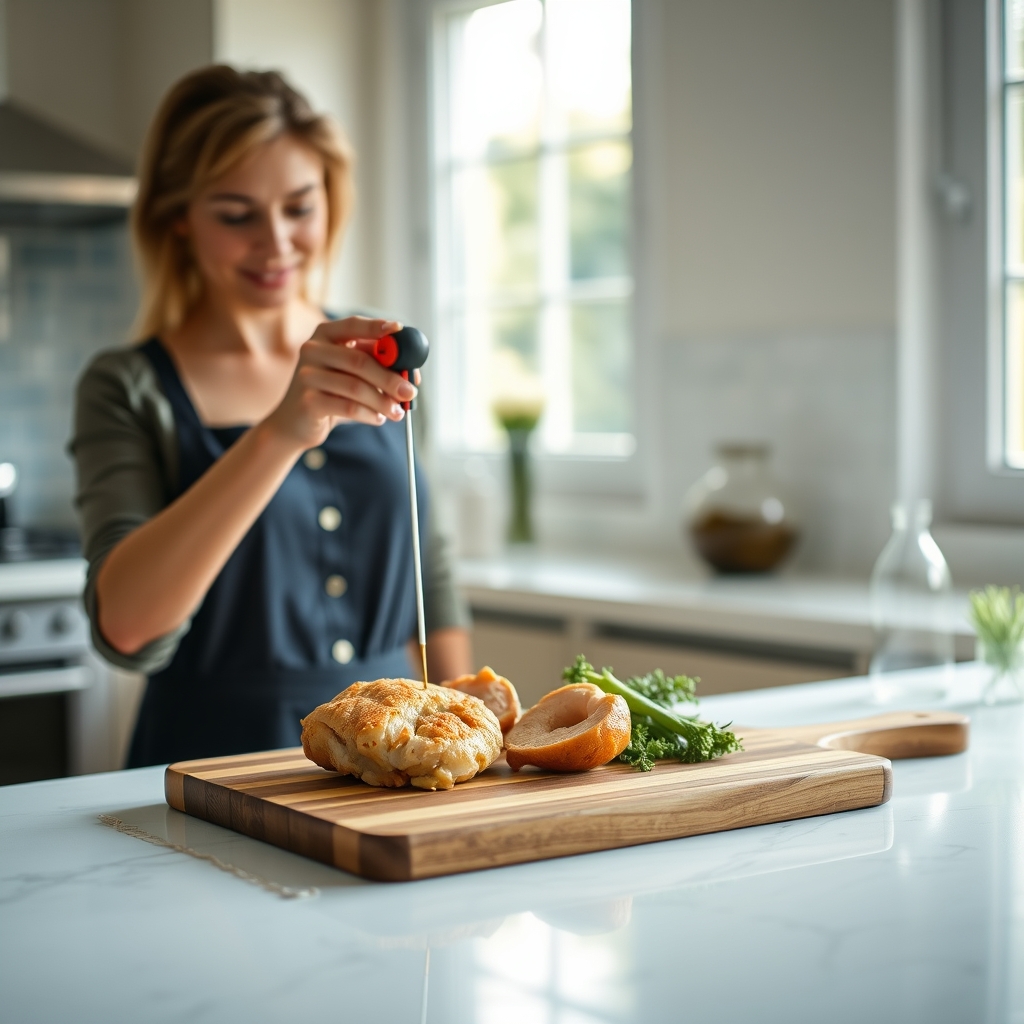
- Serve – only place food on the table once it has reached the appropriate temperature (above 75 °C for cooked meats, below 5 °C for cold dishes). Keep hot foods hot and cold foods cold.
- Repeat – after the meal, promptly refrigerate leftovers in shallow containers to encourage rapid cooling.
In practice, this usually means timing your grill so that the last batch of burgers finishes just as guests are ready to eat, and moving cooked items to a chilled serving tray if they will sit for longer than 30 minutes.
Safe vs risky habits (a quick comparison)
| Habit | What the evidence says | Why it matters |
|---|---|---|
| Check use‑by dates | Some people still eat past the date. | Use‑by dates indicate when safety can no longer be guaranteed, especially for perishable items. |
| Store leftovers promptly | Many keep leftovers beyond recommended time. | Delayed cooling keeps food in the danger zone, allowing bacterial growth. |
| Reheat only once | Multiple reheats are common. | Each reheating cycle gives bacteria a chance to survive if the food does not reach 75 °C throughout. |
| Separate raw and cooked foods | Cross‑contamination still occurs. | Pathogens from raw meat can transfer to ready‑to‑eat foods via cutting boards or knives. |
| Keep hot foods hot / cold foods cold | Outdoor meals often leave food at room temperature. | Maintaining safe temperatures stops bacterial multiplication. |
The table highlights that the “safe” column aligns with the FSA’s checklist, while the “risky” column reflects behaviours the survey identified as prevalent.
Who gains, who loses, and where the trade‑offs lie
In practice, families who adopt the “Stop. Think. Serve.” routine gain peace of mind and reduce the chance of a summer stomach upset that could derail a holiday. Restaurants and caterers that already follow strict temperature controls stand to benefit from the public’s heightened awareness – they can market themselves as safe providers.
Conversely, people who rely on convenience foods, bulk‑cooking for the week, or who lack reliable refrigeration (for example, during a camping trip) may find the guidance harder to implement. The trade‑off is often between convenience and safety: packing a pre‑made potato salad for a picnic is quick, but without an insulated cooler it can become a breeding ground for bacteria.
What we would watch is the uptake of portable cooling solutions (e.g., insulated bags with gel packs) and the prevalence of “one‑pot” meals that minimise handling. If these become more common, the risk profile could shift, reducing the need for multiple reheats but possibly increasing the importance of keeping the single pot at safe temperatures.
What could go wrong or remains unclear
The FSA’s report does not quantify how many people fall into each risky category, nor does it break down behaviours by age, region, or socioeconomic status. Without that detail it is hard to target interventions where they are needed most. Moreover, the guidance assumes access to reliable refrigeration and cooking equipment – an assumption that may not hold for everyone who picnics in a park or camps in a remote area.
Another gap is the lack of data on how often people actually follow the “Stop. Think. Serve.” steps once reminded. Behaviour change is notoriously difficult; the campaign’s impact will depend on whether the pause becomes a habit or just a slogan.
A simple step to try this week
Before your next barbecue or picnic, set a 5‑minute timer as soon as you finish preparing the food. Use those minutes to check dates, separate raw and cooked items, and arrange a cooler or warming tray so that hot food stays above 60 °C and cold food stays below 5 °C. This short pause embeds the first part of the campaign into your routine and makes the rest of the checklist easier to follow.