Toilet flushes can spray invisible germs – what the evidence really says
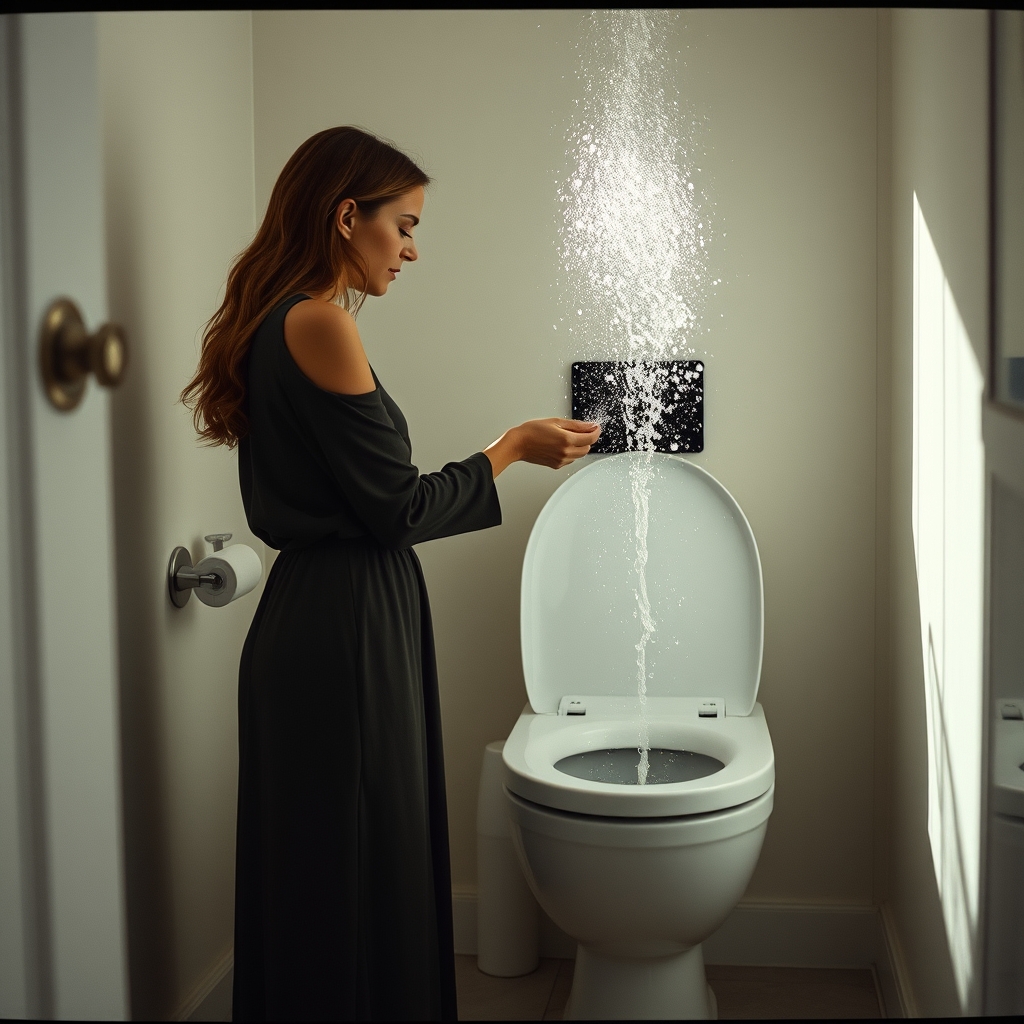
New research shows flushing creates aerosol plumes that can carry pathogens; learn the practical steps to limit exposure.
According to The Guardian, a review by Flinders University researchers found that a single flush can launch a cloud of microscopic particles into the air around a toilet. The particles, some of which carry bacteria and viruses, linger long enough to be inhaled, meaning a routine bathroom habit could become a hidden exposure route.
The finding matters because we spend a large proportion of our day inside homes and public buildings, and many of us assume the toilet bowl is a sealed container once the lid is shut. If a flush can create a "plume" that reaches adult breathing height, the simple act of closing the lid may not be as protective as we thought.
Why bathroom aerosols have become a public‑health question
Aerosols are tiny droplets or solid particles that stay suspended in air for seconds to hours. In a bathroom they can arise from splashing water, flushing waste, or even from the movement of air through a vent. The concern grew during the COVID‑19 pandemic when researchers wondered whether the virus could travel on toilet‑generated aerosols. Although the evidence for SARS‑CoV‑2 is still mixed, other microbes – legionella bacteria, influenza viruses and norovirus – are well documented as capable of surviving in bioaerosols (aerosols that contain biological material). The Guardian article summarises a systematic review of 22 studies that examined exactly this phenomenon.
The physics of a turbulent flush
When a toilet is flushed, water rushes from the cistern into the bowl at high speed. This rapid inflow creates turbulence – chaotic, swirling motion that breaks the water surface and throws droplets into the surrounding air. The size of those droplets matters: particles under about 10 µm can stay aloft for several seconds, while larger droplets fall quickly. The review found that more turbulent flushes, typically those that use a larger volume of water, generate a greater number of fine particles. Those particles can travel upward, reaching the height of a seated adult’s breathing zone (approximately 1.2–1.5 m above the floor) and remain airborne for at least 20 seconds, according to the measurements reported.
The mechanism is straightforward: kinetic energy from the incoming water is transferred to the water already in the bowl, creating a spray that breaks into micro‑droplets. Those droplets can pick up microbes that are already present in the bowl water – either from the previous user’s waste or from contamination of the bowl surface. Once airborne, the droplets can be inhaled deep into the respiratory tract because of their small size.
What the review actually measured
The Flinders team did not conduct new experiments; instead they pooled data from 22 earlier studies that used particle counters, microbial culture plates, and molecular detection techniques. Across the studies, three patterns emerged:
- Particle count rises with flush volume. A flush using 6 L of water produced roughly twice the number of detectable particles compared with a low‑volume 3 L flush.
- Turbulence matters more than lid position. While some experiments showed a modest reduction when the lid was closed, the difference was small compared with the effect of water volume and flush speed.
- Ventilation is a wildcard. Bathrooms with active extraction fans cleared aerosols faster, but the studies varied widely in fan capacity and room size, making a clear conclusion difficult.
The authors concluded that “the effects of indoor aerosols have been understudied” and called for more work on building design and infection control.
Comparing practical mitigation strategies
Below is a simple comparison of the three most common actions people consider after using a toilet. The assessment is based on the evidence presented in the review and on practical considerations for a typical UK household.
| Mitigation action | Expected aerosol release* | Practicality in everyday use | Typical recommendation |
|---|---|---|---|
| Flush with lid up (no lid or lid raised) | High – plume reaches breathing zone | Requires no extra step, but may feel uncomfortable in public toilets | Not advised if you can avoid it |
| Flush with lid down | Medium – plume reduced but not eliminated | Slight extra effort; may be impossible in toilets without a lid | Reasonable precaution for home use |
| Use a low‑volume flush (e.g., dual‑flush 3 L) | Low – fewer particles generated | Depends on toilet design; many UK homes have dual‑flush models | Best option where available |
| Increase bathroom ventilation (run extractor fan) | Low to medium – particles cleared faster | Simple to implement; fan must be functional and sufficiently powerful | Recommended, especially after multiple uses |
| Combine lid‑down with low‑volume flush and fan | Lowest – multiple risk‑reducing factors | Requires coordinated actions, but each step is simple | Ideal for households with immunocompromised members |
*“High”, “Medium” and “Low” are qualitative descriptors based on relative particle counts reported in the source studies.
Who should be most concerned?
The review’s co‑author, environmental health professor Harriet Whiley, pointed out that healthy adults are unlikely to develop serious illness from a single exposure to toilet‑generated aerosols. The microbes most often detected – legionella, influenza and norovirus – normally cause disease only when a person ingests a sufficient dose or when the immune system is compromised.
For immunocompromised individuals – for example, patients undergoing chemotherapy, organ‑transplant recipients, or people with advanced COPD – even a modest inoculum can trigger severe infection. In hospitals, aged‑care facilities and other communal settings, the risk calculus changes: a single aerosol plume could seed an outbreak among vulnerable residents. That is why the authors highlighted “building design and infection control” as priority areas.
In public restrooms, the situation is less clear. High footfall means the bowl is likely to contain more microbial load, and many public toilets lack a lid altogether. The same study noted that 50‑80 % of people use mobile phones in the toilet, potentially transferring any deposited microbes to other surfaces. While the aerosol itself may be transient, the downstream contact chain – door handle, tap, phone – can prolong exposure.
For most home users, the risk of a serious infection from a single flush is low. Nevertheless, the precautionary principle – “if it’s easy to do, it doesn’t hurt” – supports simple steps like closing the lid and running the extractor fan, especially if anyone in the household is vulnerable.
Gaps in the evidence and what could go wrong
The review highlighted several uncertainties that readers should keep in mind:
- Infectious dose is unknown. Detecting a pathogen in an aerosol does not mean enough of it reaches the lungs to cause disease. Laboratory studies often use concentrations far higher than those typical of a household toilet.
- Ventilation effects are not quantified. While the presence of an extractor fan appears beneficial, the studies varied in fan flow rates (from 30 m³/h to over 150 m³/h). Without standardised measurements, we cannot say how long a plume remains hazardous in a poorly ventilated bathroom.
- Lid design matters. Some modern toilets have a hinged lid that creates a seal when closed; older models may have a gap that lets air escape. The review did not separate these designs, so the “medium” rating for lid‑down flushes could be optimistic for some fixtures.
- Behavioural factors are under‑studied. The chain of contact – touching the door, the tap, the phone – was mentioned anecdotally by an external expert but not measured in the aerosol studies. That means the overall exposure risk may be higher than the plume alone suggests.
- Geographical differences. The studies compiled were conducted in various climate zones and with differing water quality. In areas where recycled or rainwater is used for flushing, the microbial profile could shift, potentially increasing the presence of opportunistic pathogens.
If any of these gaps prove significant, the simple advice of “close the lid and run the fan” might not be enough in high‑risk settings. Future research should aim to quantify viable pathogen counts in real‑world bathrooms and to test mitigation strategies in a controlled, yet realistic, environment.
A practical step‑by‑step plan for the coming week
- Check your toilet’s flush volume. If you have a dual‑flush system, set the lever to the low‑volume (≈3 L) option for liquid waste.
- Always close the lid before flushing – even if the lid is not a perfect seal, it reduces the visible plume.
- Run the extractor fan for at least 30 seconds after each use (or longer if the bathroom is small and the fan is low‑powered).
- Wash your hands thoroughly for 20 seconds after exiting the bathroom; use soap and warm water.
- Avoid using mobile phones in the toilet. If you must, consider wiping the screen with a disinfectant wipe after use.
- If someone in the household is immunocompromised, add a second precaution: keep a small portable air purifier with a HEPA filter in the bathroom, and run it for a few minutes after use.
Implementing these actions takes less than a minute each day but aligns with the evidence that turbulence, volume and ventilation are the main drivers of aerosol formation. By reducing the amount of water used, sealing the bowl, and clearing the air, you lower the chance that any invisible plume could become a health issue.