How to Defrost Chicken Safely and Keep Your Fridge Working Properly
Learn evidence‑based ways to defrost chicken without risking bacteria and simple steps to improve uneven refrigeration in your home fridge.
According to Health, the biggest food‑safety risks when defrosting chicken are exposure to the temperature “danger zone” (40 °F–140 °F / 4 °C–60 °C) where bacteria multiply rapidly, and poor fridge airflow that can cause some items to freeze while others warm and spoil. Both issues are easy to manage with a few practical habits, which matters for anyone who stores raw meat at home and wants to avoid waste or illness.
Why temperature control matters for raw poultry
Raw chicken is a prime source of Campylobacter and Salmonella. These bacteria are usually present on the surface of the meat and can multiply when the meat sits in the danger zone for more than two hours. The USDA recommends cooking chicken to an internal temperature of 165 °F (74 °C) to kill any surviving pathogens, but that only works if the meat has not already been heavily colonised during thawing.
In the UK, the Food Standards Agency mirrors these guidelines, advising that raw poultry should be kept below 4 °C (40 °F) in the fridge and never left at room temperature for longer than an hour. The principle is simple: keep the meat cold until it is ready to be cooked, and minimise the time it spends warm.
Common ways to defrost chicken and what the evidence suggests
| Method | Typical time (per 500 g) | Equipment needed | Temperature control | Main advantage |
|---|---|---|---|---|
| Refrigerator (cold‑room) | 12‑24 h | Fridge space | Constant ≤4 °C | Safest; minimal bacterial growth |
| Cold‑water bath (sealed) | 1‑2 h (water changed every 30 min) | Bowl, cold tap water | Water kept ≤4 °C | Faster than fridge, still safe |
| Microwave (defrost setting) | 5‑10 min | Microwave | May create hot spots >4 °C | Very quick, but uneven heating |
| Instant‑pot (frozen cooking) | 10‑15 min | Instant‑pot or pressure cooker | Cooking begins immediately, no defrost | Convenient for small portions |
The table shows that the refrigerator method is the gold standard for safety because the meat never leaves the cold environment. A cold‑water bath is the next best option if you need the chicken sooner; the key is to keep the water cold and change it frequently so the temperature stays below 4 °C. Microwaves can bring parts of the meat into the danger zone, so the guidance is to cook the chicken straight after microwaving. The instant‑pot route skips defrosting altogether, but it requires a recipe that starts from frozen and still demands close monitoring to avoid under‑cooking.
How to improve uneven refrigeration in a mini fridge
The live Q&A highlighted two frequent fridge complaints: cans exploding from over‑freezing and milk spoiling faster than expected. Both are symptoms of poor airflow or a failing seal.
- Avoid over‑filling – When shelves are packed, cold air cannot circulate. The result is pockets of colder air that can freeze liquids, while other spots stay warmer and allow spoilage.
- Check door seals – A compromised gasket lets warm kitchen air in each time the door opens, raising the internal temperature. Run a thin piece of paper along the seal; if it slides out easily, the seal may need replacement.
- Clean the condenser coils – Dust on the coils reduces heat exchange, causing the compressor to work harder and temperature to fluctuate. Vacuum or brush the coils (usually on the back or underneath) every six months.
- Use a fridge thermometer – Place a small digital probe (e.g., ThermoWorks Thermopop) in the centre of the fridge. Aim for a steady 3 °C–5 °C. If the reading spikes after opening the door, consider reducing the fridge’s load or rearranging items for better airflow.
- Separate hot and cold foods – Store items that generate heat (e.g., freshly cooked leftovers) on the top shelf where warm air rises, and keep raw meats on the bottom shelf to avoid cross‑contamination.
Trade‑offs and practical recommendations
The main trade‑off when choosing a defrost method is speed versus safety. A refrigerator thaw guarantees the meat stays below the danger zone, but it requires planning a day ahead. A cold‑water bath halves the waiting time but needs active attention to change water. Microwaving is the quickest, yet the risk of uneven heating means you must cook the chicken immediately to prevent any warm patches from becoming bacterial breeding grounds.
For most UK households, the simplest routine is:
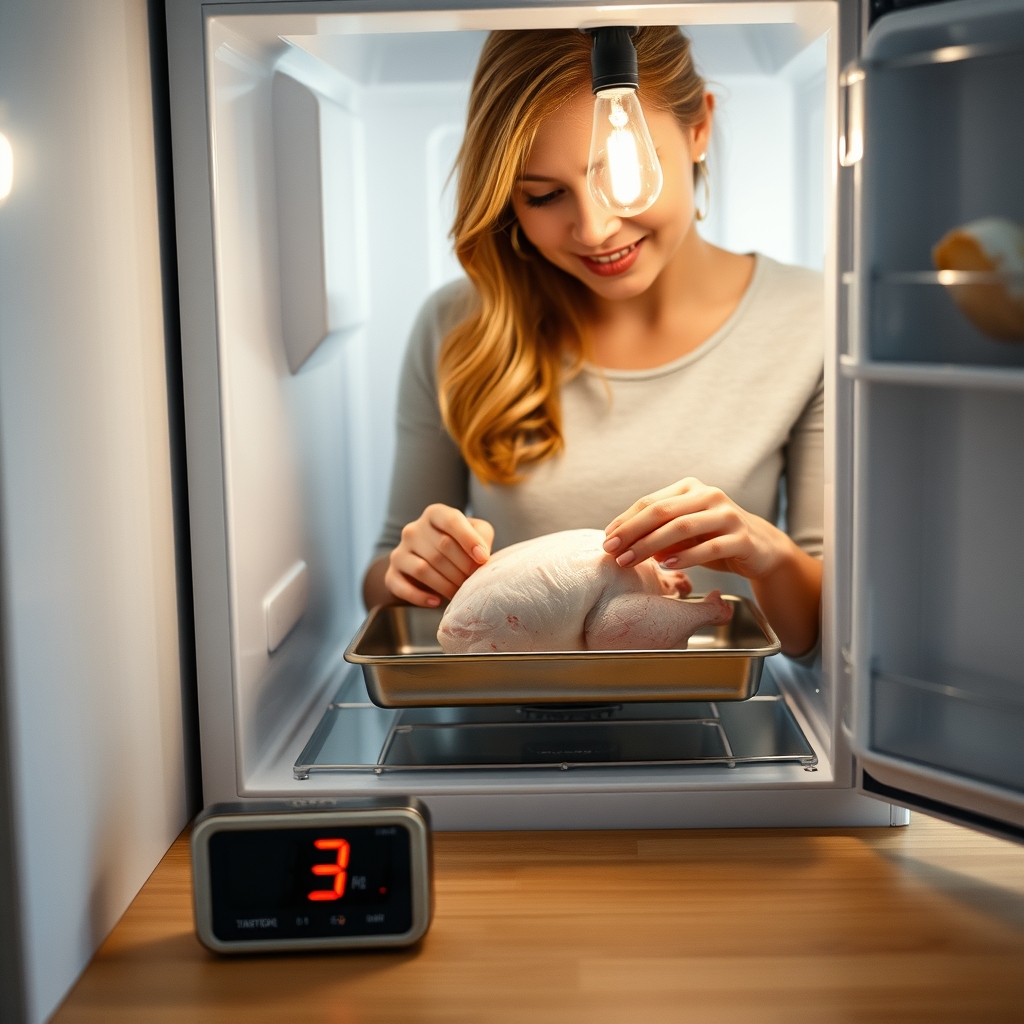
- Plan ahead – Transfer chicken from the freezer to a plate on the bottom shelf of the fridge the night before you intend to cook.
- If you forget – Use the cold‑water method, keeping the water at a brisk, cold flow and swapping it every 30 minutes.
- Only use the microwave when you have no other option, and follow it immediately with a full cooking cycle.
Regarding fridge performance, the cost of a professional service call is modest compared with the price of food waste and potential illness. However, many of the fixes above can be done by the homeowner without specialist help. The biggest gain is consistency: a fridge that stays around 4 °C will keep milk fresh for its labelled shelf‑life and prevent cans from bursting.
What the source leaves open and where caution is needed
The Guardian live Q&A did not provide quantitative data on how quickly bacteria multiply at specific temperatures, nor did it discuss the impact of repeated temperature swings on fridge efficiency. The advice to "call a professional" for seal or coil issues is sensible, but the article does not explain how to assess whether a seal is truly faulty versus simply being dirty. Moreover, the recommendation of a specific thermometer model (ThermoWorks Thermopop) may bias readers; any calibrated food‑grade thermometer will work, and cost‑effective options are available on the UK market.
Another gap is the lack of guidance for those without access to an instant‑pot or a microwave. For people living in shared accommodation with limited appliances, a cold‑water bath may be the only viable fast method, but the article does not specify the exact water temperature to aim for (ideally 4 °C or colder).
Simple actions to try this week
- Place a fridge thermometer on the middle shelf and note the temperature at three different times of day.
- Re‑arrange the fridge to create at least an inch of space between items on each shelf.
- Defrost a small chicken portion using the cold‑water method, changing the water every 30 minutes, and record how long it takes to become pliable.
- Inspect the door seal with a piece of paper; if it slides out, order a replacement gasket.
- Schedule a coil cleaning – unplug the fridge, remove the rear panel, and gently vacuum the coils.
Doing these five steps will give you concrete data on how your fridge performs and will ensure that any chicken you prepare is thawed safely, reducing the risk of food‑borne illness and unnecessary waste.